Dubai’s Real Estate ETFs: Passive Income Streams for Diversified Portfolios
In the dynamic world of investment, Dubai’s real estate ETFs stand out as a smart way to tap into the UAE’s thriving property market without the hands-on demands of direct ownership. These exchange-traded funds bundle shares in high-performing real estate assets, offering you steady passive income streams through dividends and capital appreciation. As global investors seek diversification amid economic shifts, Dubai’s market delivers with its tax-free environment, robust infrastructure, and projected growth. At DCI Group, with over 15 years navigating the UAE landscape, we guide clients toward these opportunities. This article explores how real estate ETFs in Dubai can enhance your portfolio, backed by current data and expert insights for 2025-2026.
Understanding Dubai’s Real Estate ETFs
Dubai’s real estate ETFs provide an accessible entry into the property sector, allowing you to invest in a basket of assets like residential towers, commercial spaces, and hospitality venues. Unlike traditional real estate, where you’d manage tenants or maintenance, ETFs trade on stock exchanges, offering liquidity and low entry barriers starting from just a few thousand dollars.
Key players include funds tracking indices from the Dubai Financial Market (DFM) and Nasdaq Dubai. For instance, the DFM Real Estate Index ETF mirrors top performers, while others focus on sustainable developments. We at DCI Group recommend these for their transparency, with holdings detailed in quarterly reports. This structure minimizes risk by spreading exposure across multiple properties, making it ideal for building diversified portfolios.
Benefits of Investing in Dubai Real Estate via ETFs
One major advantage is the passive income potential: Dubai’s rental yields average 6-8% annually, far outpacing many global markets. ETFs distribute these as dividends, often quarterly, providing reliable cash flow without operational hassles.
Diversification is another edge. By investing in ETFs, you gain exposure to varied sectors—residential in booming areas, retail in tourist hubs—reducing volatility. Compared to stocks, real estate ETFs in Dubai have shown lower correlation with equity markets, stabilizing your overall returns. Plus, the city’s zero-income-tax policy boosts net gains. Our 15+ years at DCI Group have shown clients achieving 10-12% compounded annual growth through such vehicles, outperforming traditional bonds.
Key Districts and Developers Shaping Dubai’s ETF Landscape
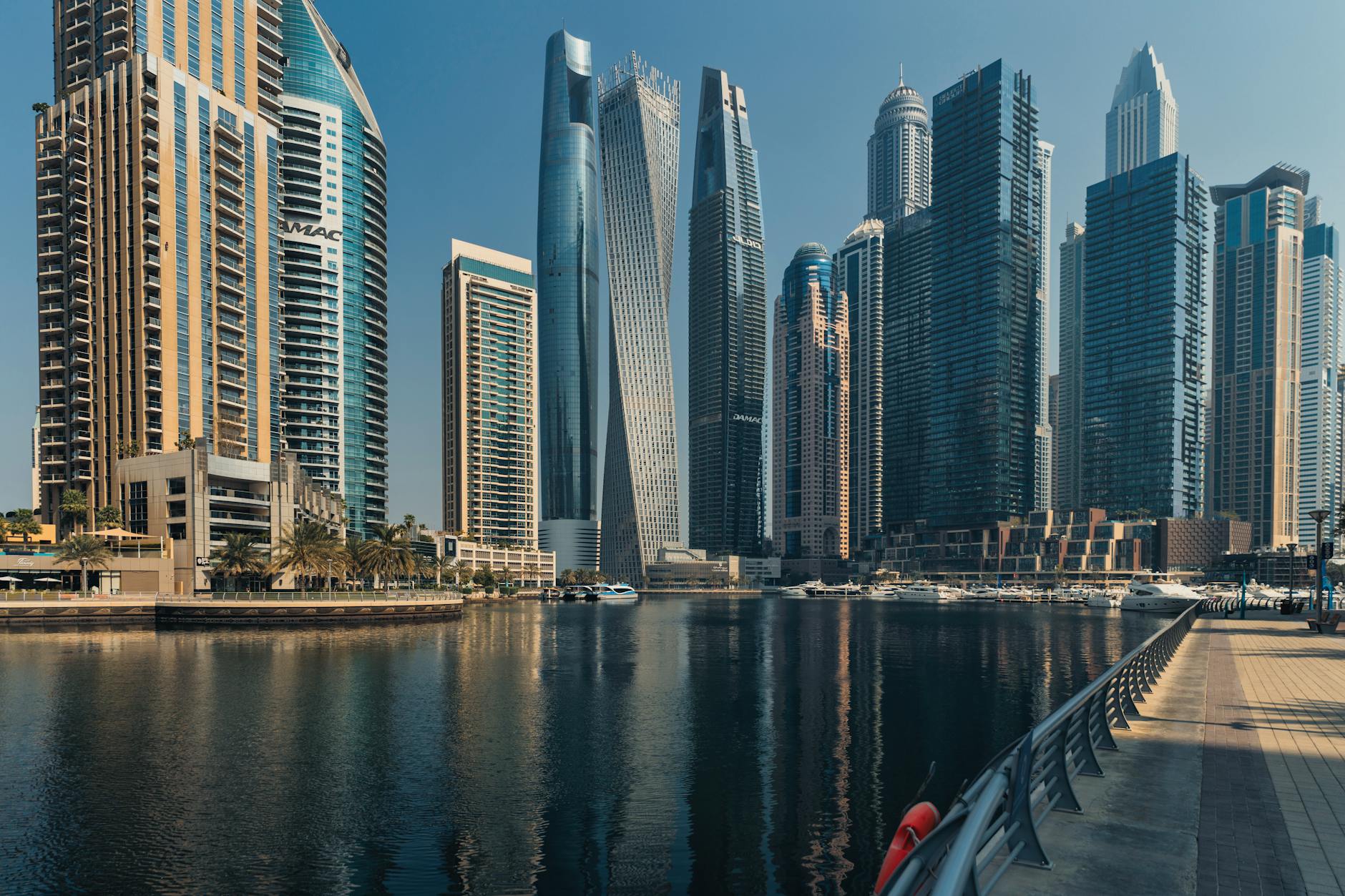
Dubai’s appeal lies in its hotspots, which form the backbone of many ETFs. Downtown Dubai, home to the Burj Khalifa, drives premium residential and office demand, with Emaar’s developments like Address Residences yielding up to 7% rents. Dubai Marina excels in waterfront living, where Damac Properties’ projects contribute to ETF holdings with high occupancy rates.
Emerging areas like Jumeirah Village Circle (JVC) offer affordable entry points, backed by Nakheel’s master-planned communities. These districts feature in ETFs for their growth trajectory: JVC properties have appreciated 15% year-over-year. Developers like Sobha Realty add luxury to the mix, ensuring ETFs capture both stability and upside. We leverage our UAE expertise to analyze these for optimal portfolio fit.
Market Outlook and Projected Returns for 2025-2026
Looking ahead, Dubai’s real estate market is poised for acceleration. The Dubai Land Department forecasts a 12% rise in property transactions by 2025, fueled by Expo 2020’s legacy and new infrastructure like the Al Maktoum International Airport expansion. ETFs tracking this momentum could deliver 8-10% total returns, combining 5-7% yields with 3-5% appreciation.
To illustrate, consider this comparison of projected performance:
| Asset Type | 2025 Yield (%) | 2026 Appreciation (%) | Total Return (%) |
|---|---|---|---|
| Residential ETFs (e.g., Downtown) | 6.5 | 4 | 10.5 |
| Commercial ETFs (e.g., Marina) | 7 | 5 | 12 |
| Mixed-Use ETFs (e.g., JVC) | 5.5 | 6 | 11.5 |
These figures, drawn from our market analysis at DCI Group, highlight why Dubai real estate ETFs suit forward-thinking investors.
Integrating ETFs into Your Diversified Portfolio
To maximize benefits, allocate 15-25% of your portfolio to Dubai real estate ETFs, balancing with equities and fixed income. Start by assessing your risk tolerance—we advise blending high-yield funds with growth-oriented ones for steady compounding.
Our team at DCI Group customizes strategies, drawing on deep UAE insights to select ETFs aligned with your goals. Regular rebalancing ensures adaptability to market shifts, like rising tourism boosting hospitality-linked funds. This approach has helped our clients weather global uncertainties while capturing local booms.
In summary, Dubai’s real estate ETFs offer a compelling blend of passive income streams and diversification, powered by the city’s vibrant districts and trusted developers. With projected 8-10% returns through 2026 and tax advantages, they strengthen any portfolio against volatility. At DCI Group, our 15+ years in the UAE equip us to help you navigate this space confidently.
Ready to explore how these ETFs fit your investment strategy? Contact us today for a free consultation or personalized property selection guidance. Let’s build your path to sustainable wealth in Dubai.
⚠️ Disclaimer: Investments involve risks, including potential loss of principal. Past performance does not guarantee future results. Consult a financial advisor before investing. Data is based on current market projections and subject to change.
Image by: Jakub Zerdzicki
https://www.pexels.com/@jakubzerdzicki